Saturday, May 17, 2025


Is feeding eggs to your dogs a good idea?

April 22, 2025


Is feeding eggs to your dog a good idea?

Are you considering feeding eggs to your dog? We decided to feed them to our dogs a few years back. We stopped feeding commercial food to go with a homecooked diet. Living on a farm, we have access to many fresh, homegrown foods, so it’s easy for us. Plus, we don’t have to deal with the recalls constantly happening with commercial dog food.


If we want to feed the safest, healthiest food to our dogs, it takes thought and a bit of research. While the many people favor commercial food for its ease of feeding and their health claims, kibble is not the only way to go and there is definitely a downside. 


How do eggs help your dog?

When I researched, I found that eggs are full of protein, amino acids, and vitamins that can help your dog be healthy. They are full of vitamins, minerals, and amino acids, especially if they come from chickens raised to be free-ranging or at least in the most healthy conditions possible. And all parts of the egg are good for your dog, from the yolk to the white to even the shell, so feeding eggs to them makes sense.



What are the downsides?

They say eggs should not be fed raw since they can carry salmonella or other bacteria that can make your dog sick. Cooking the eggs reduces this risk a lot, however. If you're going to feed them raw, ensuring that they are fresh and come from good sources can decrease the risk.


Also, some dogs have food sensitivities to eggs. If you have a dog sensitive to foods, you’ll want to introduce eggs slowly and watch for issues, just in case. Likewise, if your dog starts itching or showing other signs of being sensitive, you’ll want to stop any new foods, including eggs, and reevaluate.


If you have to buy eggs at the grocery store, the cost goes up, and the health benefits decrease. Feeding eggs to your dog from the grocery store is still healthy but not as healthy as if you’re able to get them fresh.


There are lots of theories about feeding your dog.  If you do some research, you will find that eggs are worth considering due to their health benefits.
There are lots of theories about feeding your dog. If you do some research, you will find that eggs are worth considering due to their health benefits.


Feeding eggs to your dog is a great idea!

We think this food is worth considering. Our dogs have shiny, healthy coats, and no symptoms of food allergies. We scramble them with just a little cooking spray to prevent the eggs from sticking, although you can hard boil them or fry them if you keep the oils and seasonings to a minimum. We feed them every morning, and the dogs LOVE them!


If you’re considering this type of diet, you can learn more about cooking eggs for your dogs here. It’s not for everybody, but you might find that it’s easier than you think. For other tips about feeding your dog for health, read this post about feeding coconut to your dog or this one about food sensitivities in dogs.


Have you tried feeding eggs to your dog? Tell me about it in the comments below.


Would a dog seat belt help your dog?

April 15, 2025


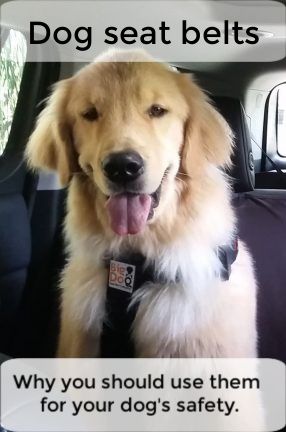
Dog seat belts?

Why a seat belt for your dog? When you get in the car, you put your seat belt on, right?  At least you’re supposed to because all the studies show that you’re much safer that way in case of an accident.  While the same thing goes for your dog, not all devices labeled for safety are the same.


Being a concerned dog parent, I talked to Dwayne with Big Dog Seat Belt Company about their system and why you might want to buy it.  Here is what he said.


Why do dogs need seat belts?

You… your dog… other passengers… cargo… groceries… actually any object in your vehicle that is not secured will become a projectile in the event of an accident or hard braking event. In a 30 mph crash, an object will project with a force equal to 30 times its weight. A dog that weighs 60 pounds becomes an 1800 pound projectile. The force of momentum can kill the driver or other passengers.


Unrestrained dogs can and do jump out of windows, sneak out open doors at gas stations, rest areas… anywhere they can. If they get out, they can get on the road or highway causing a huge distraction and ultimately an accident. In an accident, they can be a huge problem on the scene for first responders; running around or being aggressive. Often times a dog will flee the scene, causing resources to be diverted and anxiety and heartache for the injured parties.


How do your dog seat belts keep dogs safe?


Newton's First Law of Motion… an object in motion tends to stay in motion. If an object is secured to the vehicle frame, it becomes part of the vehicle, preventing it from staying in motion and becoming a projectile. 


The OEM Seat Belt in your vehicle is attached to the frame. The Big Dog Seat Belt is held in place by the OEM Seat Belt. There are no tethers or straps allowing the dog to move forward so your dog is held securely in place.  


Think about it… The seat belt in your car goes across your hips, keeping your lower body secure in the seat.  Just like the OEM 3 point system in your vehicle, the Big Dog Seat Belt keeps your dog secure by restraining them lower on their body (Not the Neck or Shoulders), keeping their back legs and lower body in place.


Built with automobile seat belt webbing, the Big Dog Seat Belt will actually stretch on impact, reducing impact force by nearly 20 times. Exactly like the seat belt in your car.


How easy are they to install and use?

Before I started designing the Big Dog Seat Belt, I would go to dog parks and ask people exactly what they wanted and did not want in a car safety device for their pups. The Number One answer – “it has to be fast and easy, or I won't use it.” 


The Big Dog Seat Belt company makes each one to fit your dog. It arrives ready to put on your dog in less than 60 seconds. Over the head – click 2 buckles and you’re done. No additional product to buy or install. Your OEM Seat Belt goes thru the loop on the back.


What products should be avoided?

They don’t regulate pet safety products for basic safety or quality, giving a false sense of security. After 12 years of working in Fire/EMS with real-life scenarios using so-called pet safety products, I have seen many dogs and other passengers injured directly by a product. Do your research so you can avoid needless injury to your canine. 


Other devices:

– Car harnesses; designed to control your dog’s body; they use the neck and front shoulders only.  


– Tethers or straps; Can tangle around your dog's leg or even other passengers in the vehicle. These devices also cause a “shock cord effect” during an accident or emergency stop, causing severe spinal injuries or worse.


– Hammocks or screens; don’t really restrain your dog.


Riding in the front seat is also unsafe for your dog since airbags deploy at over 200mph and will kill your dog. The safest place for your dog is in the back seat, belted in.


What size dog can use a Big Dog Seat Belt?

After talking to Dwayne, I took a look at the website   www.bigdogseatbeltcompany.com.  The online site works for dogs that are 21″ long according to the measurement video.  You can watch the video here to make sure you get the right ones.  They make each one just for your dog. 


Restraining smaller dogs safely.

I researched online and found that, according to Pet MD, car seat belts aren’t as effective for smaller dogs.  In that case, a good car seat that attaches to the vehicle with the OEM seat belt and then restrains the dog with a harness in the seat can be a safer option than allowing them to roam. Dwayne recommends Pup Saver car seats because of their cocoon-like design.


Is the investment worth it?

While it certainly does take some time and money, I would say the investment and effort are well worth it.  If you love your dogs like I love mine, you want to keep them as safe as possible.  The Big Dog Seat Belt Company seems to have found a very effective and affordable answer to this question.


What do you do to keep your dog safe? I’d love to hear your thoughts in the comments below.


Dog safety plays a part in many areas of your dog’s life.  Read my posts, What is heatstroke and how to prevent it, or Do you know what to do if your dog has an emergency?


Do dogs understand us? Better than you think!

April 6, 2025

HOW DO WE KNOW IF OUR DOGS UNDERSTAND US?

Dogs understand us! I firmly believe this, at least in some cases. I know it to be true with my dogs. Have you ever had your dog respond to something you said to them? If so, maybe you know too.


If you are familiar with scientists and their theories, it takes a lot to prove that something is “true”. It wasn’t too long ago that they decided that dogs do, in fact, have emotions. We, dog lovers, have known that for quite some time.


As much as sometimes it might be important to prove something, like curing a disease or how medicine can help manage a condition, I think there are things that we can know to be true without the studies to back up our beliefs. 


If I think about it, I could come up with many examples as to why I believe dogs understand us. This is one example.


DOGS UNDERSTAND US

Quinn is a 9-year-old Aussie. She has slowed down a bit now, but she used to be busy all the time. I think she is half border collie, so whirling dervish described her pretty well most days. Playing ball is her absolute favorite thing in the world to do. She could play it All. Day. Long. 


Since I work from home, she believes I should be at her disposal for playing ball whenever the time is right, which is pretty much all the time. Well, it’s hard to get anything much done when a dog is constantly nagging you to go play. Every day, I’d be working and she’d try to get my attention. Sometimes I’d tell her (often in a loud voice) to leave me alone for a bit. Or I’d tell her to wait until I was done with ____________.


For the longest time, I didn’t pay too much more attention to it than that. Sure we’d play ball but little did I know, there was more going on than I realized.


Eventually, I noticed if I said “Wait until I get up” or “Wait until I finish _________”, she would quietly lie down with her eyes on me and wait. If I did as I told her, all was good and she’d stop nagging. We’d go outside to play and she’d be fine for a while. But if I went ahead and ignored what I’d told her, she’d nag at me again.


IT’S TRUE, SHE DID UNDERSTAND!

After seeing this several times, I finally realized that, yes, Quinn did understand that I was asking her to wait and when I was saying I’d be available. Not only did she understand, but she held me accountable for my words. If I didn’t do as I said, she’d call me on it. Sort of humbling, when you think about it, but also kind of cool. Part of living with a really smart dog, I suppose.


Have you ever realized your dog was responding to what you said? Even more importantly, have you ever tested it? You might be surprised at the results if you took the time to investigate.


YOU’VE GOT TO WATCH WHAT YOU SAY

I talk to my dogs all the time. Just what I do as a dog parent, I guess. Like many dog parents, I’ve heard about, we spell the important words like B.A.L.L. or O.U.T.S.I.D.E., just to be safe. Those are the words that will instantly fire up the whole pack around our house.


But the more I see responses to what I say, the more I believe that they really do understand. Not everything, but many things. And there are those times when they’re not much different than kids; when they’re too distracted with something else or don’t want to hear me. Seems pretending not to understand can be beneficial, even though it’s sort of naughty.


I try to make sure I say what I mean and mean what I say. I also try not to talk about things in front of them that might bother them. 


When your dog acts like they understand you, it could be because they do!


FINDING MORE WAYS DOGS UNDERSTAND US

I think we’re just touching the surface of our relationships with our dogs. For example, a speech-language pathologist put together a word board for her dog, Stella. Stella knew 29 words at the writing of the article and used them by pushing the buttons on her board. I’d love to try that with my dogs, I think. Or, if you want the science, here is a post about scientific evidence from a few years ago.


On another note, maybe it’s a lot like animal communication. They say we can understand telepathy, and maybe they can understand it too. Read my post for more.


It would be an adjustment to have my dogs be able to ask me something or tell me how they feel. Just think of all the things that would be easier. Instead of wondering if they were hungry or just bored, if they hurt someplace or how they hurt themselves, I could ask and they could tell me. It would have its downside if your dog was throwing a temper tantrum or something, but it would ultimately make our relationships stronger.


Have you had a dog that understood and responded to what you were saying? I would love to hear your experiences with your dogs in the comments below. Tell me your thoughts.


Dog Incontinence; a senior dog problem

March 31, 2025


Is your dog incontinent?

Having a dog can be messy, especially if your dog is incontinent of urine or feces. Sometimes, it's just a lack of training, but many times it is something they can't help. To get a handle on it, you’ll want to find out why. Understanding this issue can help you find ways to help your dog and keep your household in order.


According to this post by PetMD, you need to determine whether your dog is actually incontinent or just inappropriately peeing/pooping. If it’s the second reason, your dog is capable of controlling their elimination. They may need training, a change in schedule, or some other strategy to resolve the issue. If they are truly incontinent, they can’t control when they go because of some physical reason.


What causes dog incontinence?

This post from WebMD was beneficial. It has a list of lots of the common causes and some treatments that might help. The list included bladder infections, nerve or spinal problems, diabetes, or side effects from medicines, for starters.


There are lots of reasons for dog incontinence. Some of the causes can be fixed once you know the reason. The rest of them can be managed. Senior dogs seem to be affected more often than younger dogs because of the problems that come with aging. Dogs of all ages can be incontinent under certain circumstances, however.


What do you do?

The first thing to keep in mind is that you love your dog. It’s easy to get frustrated and possibly take that out on your dog in one way or another. But that’s that last thing to do because it just won’t help.


When you notice a problem, it would be wise to make an appointment with your vet. They’ll help you sort out what is causing the problem and provide some treatment options if they’re available.


Once you’ve addressed any fixable issues, it’s time to take some control of the mess that dog incontinence can cause in your household. If your dog is incontinent, they can’t help it. Punishment isn’t going to help and will only make things worse. You’ll still have a problem, and they’ll feel sad and scared since they won’t understand why they’re in trouble.


What you can do, however, is find ways to help take back control of the situation. You might consider schedule changes, frequent potty breaks, or other approaches that can allow your dog a little dignity while still maintaining your sanity. 

- Waterproof pads and diapers can help protect the carpet and furniture. 

- Frequent potty breaks can help you get ahead of any urgency. 

- Controlling when your dog eats and drinks, then planning according for potty breaks can manage timing.


It’s not easy to deal with dog incontinence, but it’s worth it.

Dog incontinence happens. It’s not exactly fun, and it can be super messy. If the shoe were on the other foot, my dogs wouldn’t abandon me. They’d be right there to help because they love me. I owe the same to my dogs. Read more about senior dog issues and check out this post about tips for helping your senior dog.


Do you have a dog with incontinence issues? Tell me about it and how you worked with it in the comments below.


Heatstroke in dogs. How can you prevent it?

March 23, 2025


It’s almost heatstroke time.

Heatstroke time is approaching. It’s spring now, with its warmer weather and outdoor activities.  While we humans are having fun, we want to have fun with our dogs too.  But they have some physical differences that are important to pay attention to. Find out how to keep your dog safe from heatstroke so you can both have fun.

Can dogs cool themselves off?

Dogs don’t sweat, except through the pads of their paws. They pant, which helps them cool off with evaporation, but only does so much. They can change or limit behavior to try to cool down, but they run into difficulties.


Dogs at risk:

– Brachycephalic (short-nosed) breeds like pugs or French bulldogs
– Darker colored dogs (since black absorbs heat)
– Heavily muscled dogs (since muscle produces extra heat)
– Very young or very old dogs
– Dogs with other pre-existing health issues
– Very high-drive dogs that don’t self-limit


What is heatstroke?

If you watch the news or are on social media, you’ve most likely heard of it.  But maybe you don’t know exactly what it is and how to recognize it. Heatstroke, a form of hyperthermia, happens pretty often to dogs since they don’t cool themselves as well as humans do.  


A dog’s normal temp is between 101 and 102.5. This dangerous condition can lead to temps of 106 or even higher!  Temperatures that high can lead to acute (sudden) renal failure, rapid or irregular heart rates, liver damage, and seizures, to name a few issues.  This is an extremely dangerous condition and failure to act can lead to death.


Signs of heatstroke include:

– Panting
– Decreased responsiveness
– Drooling
– Dark red gums
– Confusion and/or anxiety
– Glazed eyes
– Rapid heart rate
– Labored breathing
– Temperature above 103
– Vomiting or diarrhea, possibly with blood in them


If you see these symptoms, you need to try to cool your dog off a.s.a.p.!  What you can do:

– Get them out of the heat
– Let them stand or lay in cool water and bath them in it
– Encourage them to drink cool (not ice cold) water


If these steps don’t get your dog to normal quickly, or if you see seizures, vomiting, diarrhea, or minimal consciousness, you need the vet’s help as quickly as possible. Organ damage starts rapidly and makes rescue much more difficult. Read this post from VeterinaryEmergencyGroup.com for more info.


How do you prevent it?

Heatstroke can be prevented if you are prepared. All dogs have the potential to suffer from heatstroke, so you can't just assume your dog will be ok. it’s a good idea to be aware of the weather and risk factors.  If your dog is especially prone to overheat, this becomes vital.


To make sure your outing doesn’t turn into a tragedy:

– Plan an extreme activity for cooler times of the day
– Offer plenty of water
– Limit activity to shorter periods of time during the hot part of the day
– Provide a kiddie pool or other water for cooling off
– Use cooling mats, cooling coats, etc. to keep body temperature at a healthy level. If you want to buy your dog a cool coat, see Made by De for more information and to purchase an effective cool coat. Read this post for more about how a cool coat can help protect your dog.


Summertime is ideal for fun times outside.  With a little planning, it can be great for dog activities too. It pays to be aware. What do you do to help your dog stay cool? Tell me about it in the comments below.

For more ideas for helping your dog, read How to help your anxious dog on this blog.

  Is feeding eggs to your dogs a good idea? April 22, 2025 Eggs are surprisingly good for your dog; full of protein and other important nutr...